
New York DMV Motorcycle Practice Test 58
- Questions20
- Correct to pass14
- Passing score70%
- Minimum age16 years
-
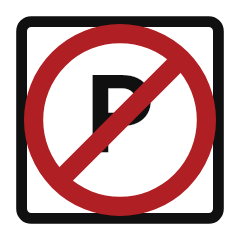
1. Why is this restriction so common beside fire hydrants, crosswalks and intersection corners?
Show answer
Answer C: To keep sight lines open and leave access for emergency crews
A vehicle left in those places hides pedestrians from approaching drivers, blocks the path of turning vehicles and can keep firefighters from reaching a hydrant.
-
2. In a staggered formation, where does the second rider belong?
Show answer
Answer C: In the right portion of the lane, about one second behind the leader
The second rider uses the opposite side of the lane roughly one second behind the leader, which staggers the group without stretching it out or putting the two riders alongside each other.
-
3. How does the distance needed to stop change when a rider doubles speed?
Show answer
Answer D: It grows to roughly four times the original distance
Braking distance rises with the square of speed, so twice the speed needs roughly four times the distance in which to stop.
-
4. What is meant by keeping a space cushion?
Show answer
Answer C: Keeping open space on all sides of your vehicle so you always have somewhere to go
Open space ahead, behind and to the sides gives you time to react and an escape path when a hazard appears, which is the core idea of defensive driving.
-
5. Can a driver be charged with impaired driving after taking a legal over the counter medicine?
Show answer
Answer C: Yes, if the medicine impairs the ability to drive safely
Impaired driving laws cover any substance that affects driving, including cold remedies, allergy pills and sleep aids sold without a prescription.
-
6. As a driver keeps drinking, in what order are driving abilities usually lost?
Show answer
Answer C: Judgment, then vision, reaction time and coordination
Alcohol reaches the parts of the brain that handle judgment first, and only later does it visibly affect sight, reactions and muscle control.
-
7. Used correctly, roughly how much of a motorcycle's total stopping power comes from the front brake?
Show answer
Answer B: About three quarters of it
Braking shifts weight onto the front wheel, so a smoothly squeezed front brake supplies roughly 70 percent or more of the stopping power.
-
8. How can the vehicle ahead of you help you read the road at night?
Show answer
Answer A: Its headlights light the road further ahead than yours can reach
The lights of the vehicle ahead reach beyond your own beam, so its brake lights and the way it moves warn you about holes, turns and hazards you cannot yet see.
-
9. How should a long trip be broken up to keep the driver alert?
Show answer
Answer D: Stop for a break every couple of hours and share out the driving
Regular breaks and a change of driver are the only reliable answers to fatigue; caffeine only postpones it.
-
10. The rear tire loses air suddenly while you are riding. Which symptom should you expect and how should you respond?
Show answer
Answer D: The rear sways or feels heavy, so ease off and slow with the front brake
A rear flat makes the back of the motorcycle wallow or sway, so hold your line, close the throttle gently and slow mainly with the brake on the wheel that still has air.
-
11. You are in the middle lane of a one-way street with three lanes when a police car approaches from behind with lights and siren. What should you do?
Show answer
Answer C: Pull to the nearest curb and stop clear of the lanes
On a one-way street you clear to whichever curb is closest, so the emergency vehicle gets a clear path down the open lanes.
-
12. You are behind a snow plow working on a highway. What is the correct way to drive?
Show answer
Answer C: Stay well back and do not try to pass it
A plow throws snow, runs wider than its body and works on the poor surface ahead of it, so the cleared road behind it is the safest place to be.
-
13. What is the correct sequence for shifting into a higher gear?
Show answer
Answer C: Roll off the throttle, squeeze the clutch, lift the lever, ease the clutch out
Closing the throttle as the clutch comes in, then easing the clutch out as the throttle is reopened, keeps the change smooth and the chassis settled.
-
14. Why is it worth planning your route before a long drive?
Show answer
Answer B: So that you are not reading a map or a screen while the car is moving
A driver who knows the route is not navigating at the wheel, which is one of the commonest sources of distraction.
-
15. Besides school signing, which warning signs may also use a fluorescent yellow-green background?
Show answer
Answer C: Pedestrian and bicycle warning signs
Pedestrian crossing, bicycle and playground warning signs may use either the standard yellow or the fluorescent yellow-green background, which draws extra attention where people outside vehicles are present.
-
16. You are turning left into a street that is divided by a raised median. Which side should you enter?
Show answer
Answer C: The right-hand roadway, so that you travel on the proper side
A raised median separates two directions of travel, so the turn must be completed into the roadway carrying traffic your way.
-
17. The circular sign shape is reserved for which warning?
Show answer
Answer C: Advance warning of a highway-rail grade crossing
A round yellow sign with a black X and the letters RR is the grade crossing advance warning sign, and the circular outline is used for no other message.
-
18. What does a windshield on a motorcycle genuinely provide?
Show answer
Answer B: Relief from wind pressure, rain and cold, which reduces fatigue
A windshield cuts wind blast, weather and fatigue, but air and debris still come around it, so the rider still needs eye protection and full gear.
-
19. A bicyclist in the bike lane ahead of you signals and starts to move left toward the turn lane. What should you do?
Show answer
Answer A: Slow down and let the rider move across
A bicyclist who needs to leave the bike lane to turn left is changing lanes like any driver, and following traffic should make room.
-
20. You are descending a long steep grade with a loaded truck close behind you. What should you do?
Show answer
Answer A: Hold a steady speed and let it pass when it can
Gravity pushes a loaded truck downhill and it cannot slow quickly, so give it a predictable speed and room to get by rather than braking in front of it.